
The Evolution of Generative AI Use: A Look at the Data

In my previous post, I examined how the role of the analyst has evolved over the past three decades. TL;DR: Much has changed—and the rise of powerful AI tools is perhaps the biggest reason.
Today I'll zoom out and examine some more general questions about AI usage. I'll fuse hard data with some observations.
Is Employee Adoption of AI Tools Increasing?
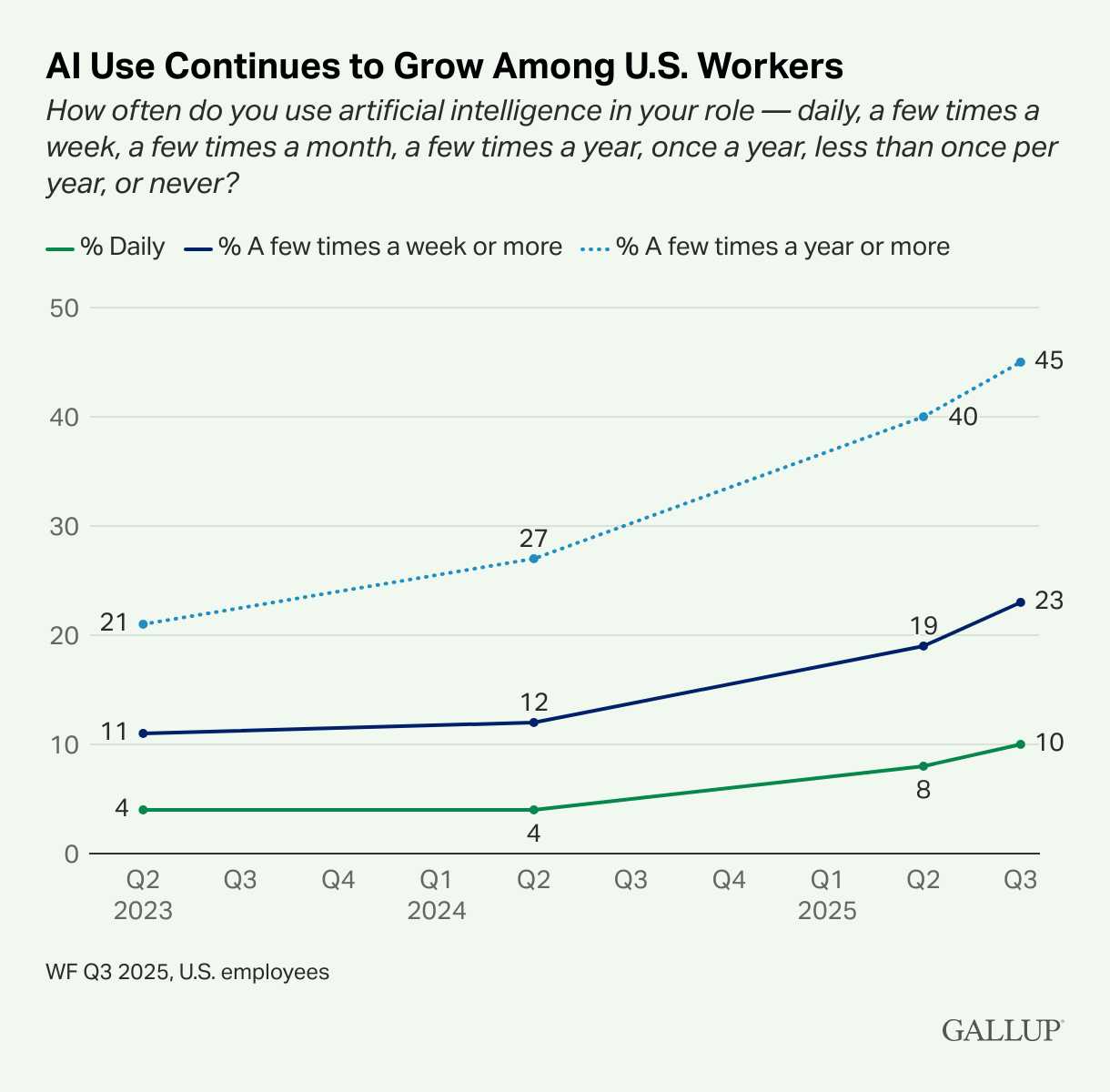
In short, yes—and rapidly. Late last year, Gallup reported that nearly half of US employees had dipped their toes in the pool. That's nearly twice as many as two years prior.
My Take
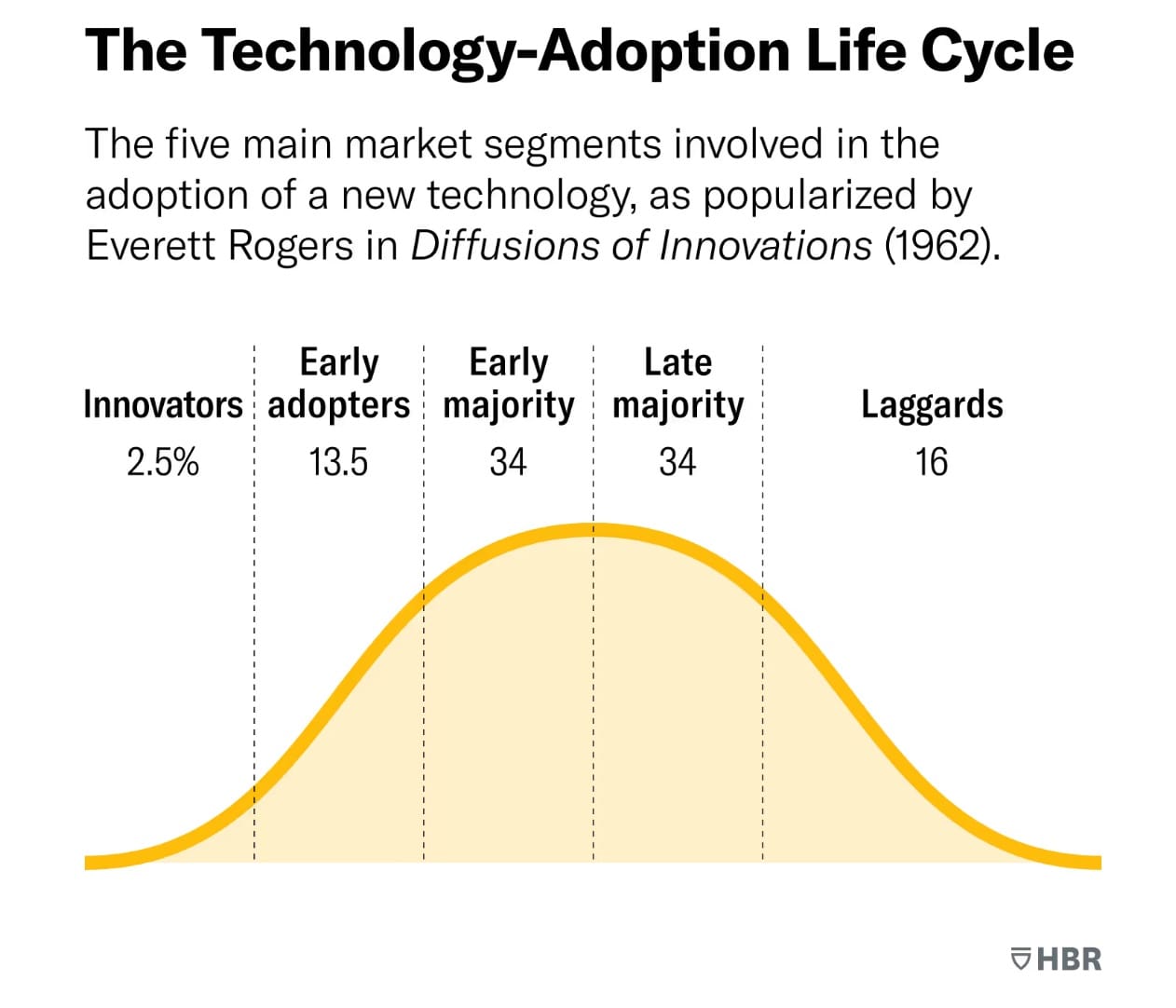
No shocker here. We've known for more than six decades about the technology adoption life cycle. From PCs to the web to smartphones to Big Data, there are always early adopters and laggards.
How Are Employees Using AI Tools?
Here are some interesting stats from a February 2025 Pew Research study of more than 5,273 employed adults using AI chatbots:
- 57% use these tools for research and information-finding.
- 52% for editing written content.
- 47% for drafting written content.
My Take
A year later, I suspect that employees are using AI to do far more than act as de facto copy editors and ad-free search engines. Agentic AI has arrived in earnest. Think of tools that can independently take action. And don't get me started on model context protocols. No, MCPs haven't been around all that long, but they are letting non-techies do things that would have previously required years of programming.

What’s Inhibiting Further Employee AI Adoption?
In some cases, it's the threat of being fired. From a Cisco January 2024 survey, 27 percent of respondents claimed that their employers at the time prohibited them from using GenAI applications.
Agentic AI has arrived in earnest.
Another factor, undoubtedly, however, is employee training—or, rather, the lack thereof. Boston Consulting Group in June 2025 discovered that nearly one-fifth of employees received no training on how to use these newfangled tools. Perhaps this fact explains why AI adoption among frontline workers had stalled. It essentially remained constant at 52 percent from 2024 to 2025.
My Take
Again, I'm shocked that the training stat is not even higher.
To be fair, a dearth of employee training does not explain everything related to uneven AI adoption. I've seen this movie before. I can recall many times during my career instances in which management refused to hire proper trainers to teach employees how to use new tech. Senior execs expected employees to pick up new apps and skills on their own time. Paradoxically, these folks would gripe that “the workforce wasn't embracing new tools.”
I'll be speaking on an Alteryx webinar on March 10, 2026.
Are Employees Following Their Organizations’ AI Policies?
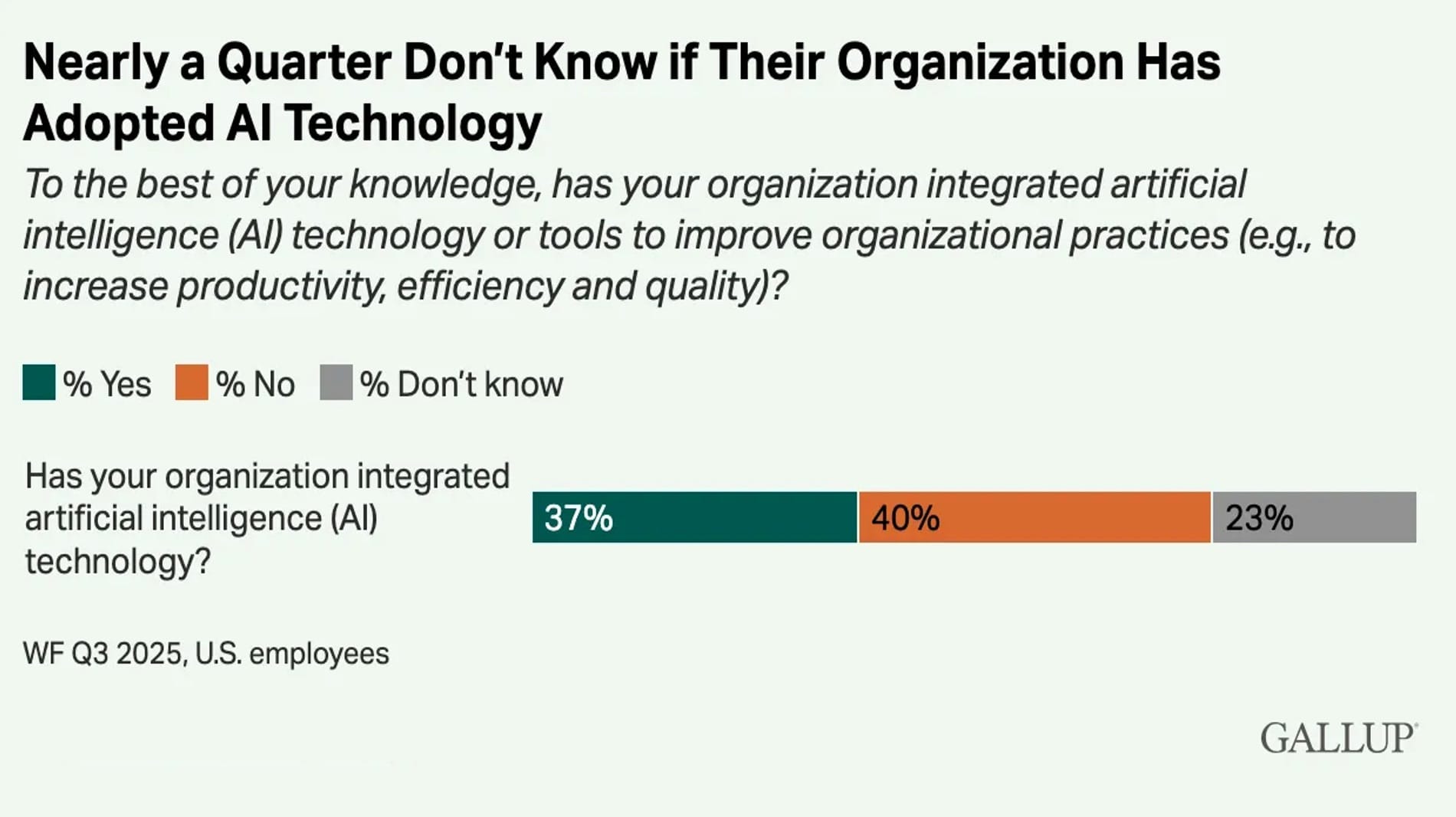
The short answer is sometimes. A better question, though, is whether workers are even aware of the rules they should be following. Gallup found that nearly one-quarter of employees don't know what—if anything—their employers are doing with AI.
My Take
I'm surprised that the percentage of oblivious employees who don't know isn't even higher. I have never seen a general-purpose tech arrive with such fanfare and change so rapidly. No doubt that many internal comms and HR folks struggle to keep current on such rapid developments.
 Phil Simon
Simon Says
Has generative AI made inroads in many organizations? Absolutely. In a way, though, its rise mirrors prior technological trends: loads of hype, uneven adoption, plenty of opportunity, and no shortage of unmitigated disasters.





Member discussion