
Life as an Analyst: Then and Now

For decades, organizations have hired business or data analysts. I should know. In the mid-1990s, I entered the corporate world and held several of them before spreading my wings.
It’s fair to say that the role has permeated organizations for decades—a trend that will continue for the foreseeable future. In 2024, the Bureau of Labor Statistics reported that more than one million people held the role of business analyst in the US. What’s more, the department expects robust growth over the next decade compared to other roles. A quick Indeed search reveals no shortage of analyst roles.
So, nothing has changed in the past 30 years, right?
Hardly.
In today’s post, I’ll describe how the analyst role has morphed over the past three decades.
Yesterday’s Analyst: A Trip Down Memory Lane
It’s fascinating to look at the history of tech and questions. Most germane to this post:
How did firms frequently staff for the analyst position back then?
Here’s an archived job description for a business analyst in 1998. Give it a read. As expected, you’ll see plenty of 20th-century artifacts:
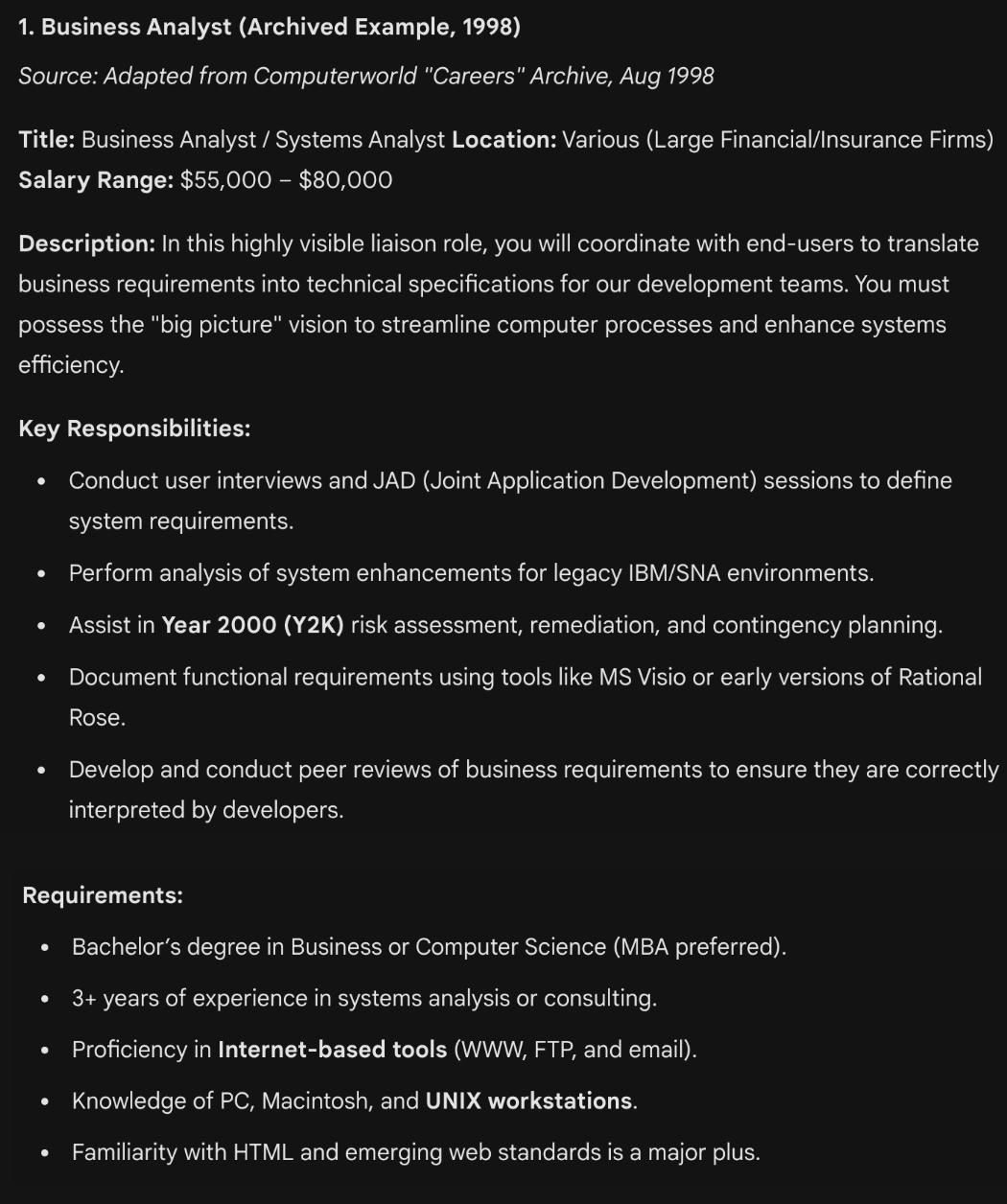
It turns out that Y2K concerns were largely overblown. At the time, though, it caused many executives a restless night.
The Job: All About Data
Analysts’ specific titles varied by employer, but one responsibility remained fairly constant: they worked with data. Lots and lots of structured data. Analysts’ managers heavily leaned on them to:
- Gather it—typically from IT departments and legacy systems.
- Cleanse it. (In my experience, the larger and more mature the organization, the older the systems, the worse the data quality.)
- Analyze it.
- Prepare static reports, charts, and recommendations on it. These reports typically explained what happened—not what is likely to happen.
It’s essential to note that analysts needed their IT departments to make enterprise data available. Calls to support desks were common. Ditto for the the IT-business divide. (Again, I was there.) Also, few people talked about analytics back then. Finally, business analysts by and large were not statisticians trained on advanced prediction methods.
Automation and Tools
As for automation, ambitious analysts could reduce manual work by creating macros in different Microsoft applications. Visual Basic proved invaluable to folks willing to get their hands dirty—if their employers didn’t ban it.
Against this backdrop, it should be no surprise that analysts spent a great deal of time in front of their ugly beige boxes and now-primitive laptops.
When it came to requirements, most analyst positions listed the typical tech stalwarts of the time. If you didn’t list proficiency in Microsoft Excel and Access, recruiters probably weren’t calling you back. Knowing Structured Query Language proved enormously useful. Less common applications included Crystal Reports and the early business-intelligence tools from Cognos: Impromptu and PowerPlay.
For the most part, the arrows in analysts’ quivers remained relatively stagnant. Notable exceptions included:
- The advent of pivot tables in Excel 5.0 circa 1993. (Yes, they blew my mind back then.)
- The introduction of the infamous ribbon in Office 2007 that confused millions of users.
Brass tacks: the analysts of yesterday spent a great deal of time doing manual work. Sure, their responsibilities were important, but few people would call it strategic.
What about now? Has the position changed? If so, then how?

Today’s Analyst
To be sure, Microsoft Excel has evolved, and it remains many analysts’ go-to app. Don’t take my word for it, though. In 2025, Alteryx released a fascinating survey titled The 2025 State of Data Analysts in the Age of AI. The company gathered data from 1,400 analysts across the globe. Among its most relevant findings here:
- 76 percent of analysts surveyed still rely on spreadsheets for data preparation tasks.
- Over the course of a typical work week, they still spend an average of 10-11 hours collecting data from multiple sources and preparing it..
Of course, the reasons vary. Based on my consulting experience, data quality remains a challenge in many firms. Forty-six percent of data analysts in the Alteryx study reported that it represented the greatest challenge when preparing data.
So nothing has changed, right?
Hardly.
Vastly Improved Tools
For starters, the tools available to analysts today are an order of magnitude better than they used to be. (Whether their employers choose to adopt them, however, is another matter.)
Their benefits of embracing them are manifold. Who wouldn’t want a vast reduction in the time it takes to prepare data for analysis? Interactive data visualizations can obviate dozens of static reports, email attachments, and, ultimately, poor business decisions. Beyond better data prep and visualization, many other powerful, data-related applications exist today that were pipe dreams back then. The reasons vary, but the explosion of artificial intelligence and automation sits at the top of the list.
Contemporary tools can make sense of unstructured and semi-structured data far better than 90s-era tools can.
Even better, today’s business applications are more accessible than ever. As I write in my book Low-Code/No-Code: Citizen Developers and the Surprising Future of Business Applications, one needn’t possess mad coding chops to make them hum.
An Example: Easier Data Prep
As but one example, Alteryx Auto Insights allows analysts—or anyone else, for that matter—to quickly glean valuable insights from boatloads of data. Here’s an example:
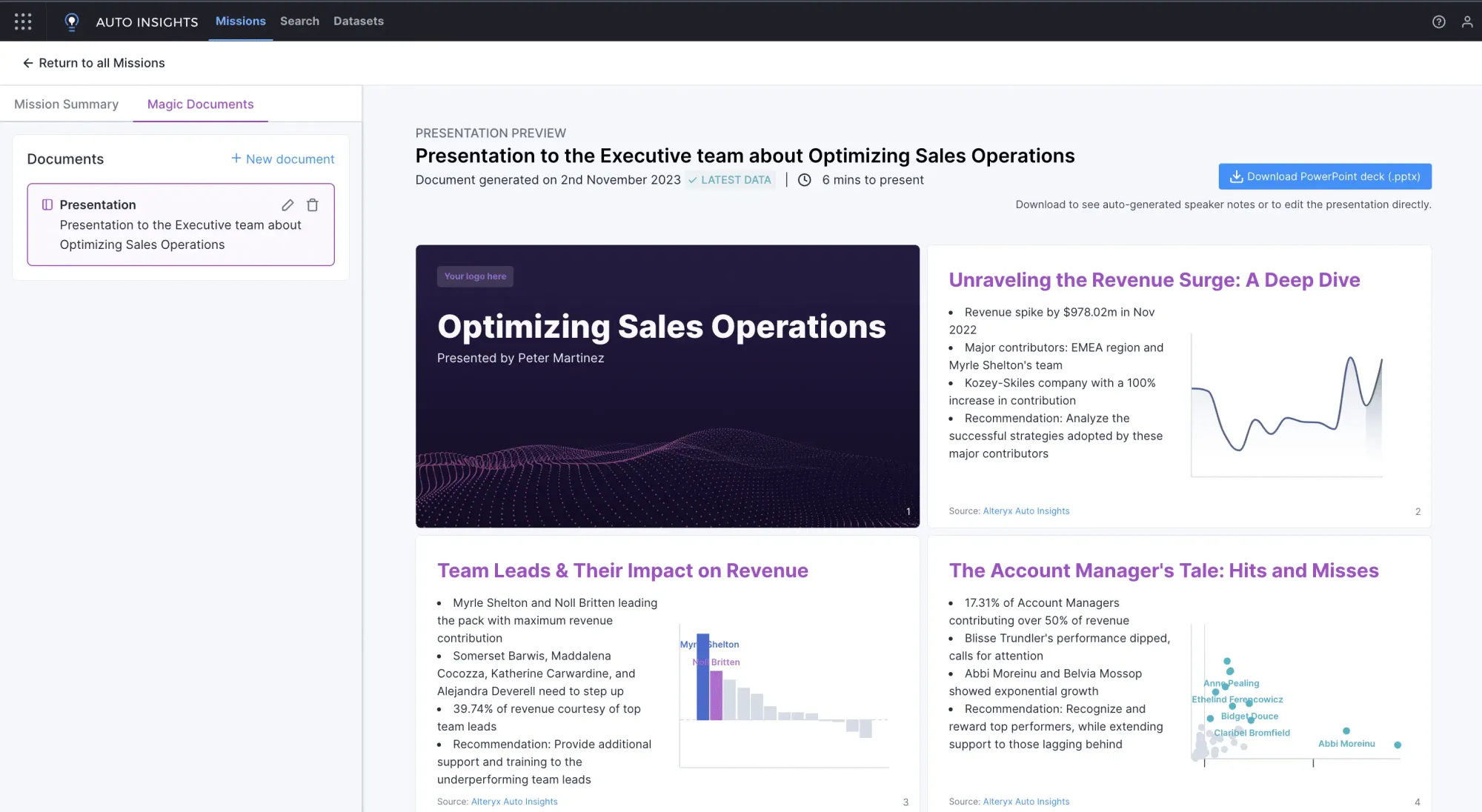
Simon Says: Today’s Analysts Are More Strategic
Put everything together, and the role of the analyst has evolved a great deal over my career. Sure, they’ll still need to wrangle and fetch data, but not nearly to the same extent as they did a quarter-century ago.
As a result, they can be far more strategic. Alteryx found that roughly 90 percent of data analysts surveyed agree that their role impacts strategic decision-making and that their influence on business decisions has increased in the past year.
I'll be speaking on an Alteryx webinar on March 10, 2026.






Member discussion