
Thoughts on Facebook's Stock Drop
I recently did an interview with Blick, one of Switzerland's largest media properties.(Click here to check it out.) I touched upon the Facebook's historic stock plunge.
Here is the unedited version.
Is Facebook still the leader in social media?
Yes, it’s the largest social network in the history of the world. For context, more people use Facebook each month than belong to any religious group save for Christianity. Brass tacks: Mark Zuckerberg finally realized that he has created something that he cannot entirely control. That’s the lesson from his testifying in front of the U.S. Congress.
Why is Facebook not as popular anymore?
Make no mistake: Facebook is still very popular. Let’s not forget that its user growth slowed last quarter but it still grew.
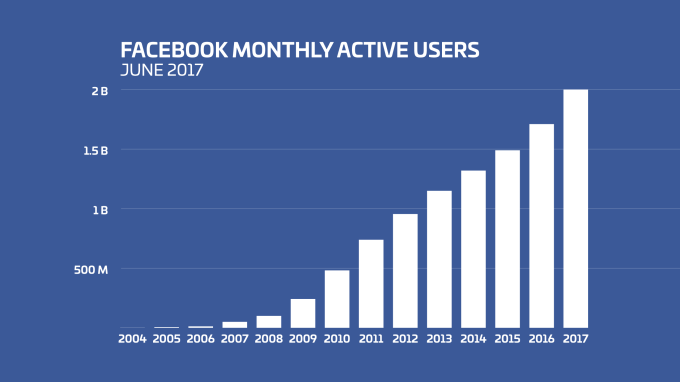
Source: TechCrunch
This isn’t easy to do when a company's users exceed two billion. By way of comparison, Twitter stalled at about 325 million monthly active users (MAUs) and MySpace never approached even that number.
Give Zuck credit for wanting to stop fake news on the social network.
Facebook’s rate of user growth has been slowing for some time now. Zuck wants people to spend quality time on the site. That is a big shift from years past.
Investors are rightly concerned that people will spend less time on the social network. This means fewer ads served. This means less money. Remember that Facebook’s real customers aren’t its users; users are the product. Facebook’s true customers are advertisers. Users are just a means to an end.
Where did Facebook go wrong?
Facebook has turned a blind eye to years of privacy and security complaints. I addressed this issue back in The Age of the Platform. I'm hardly alone in this regard.
After many mea culpas, Zuck finally realized the power and reach of his company. Russian operatives weaponized his social network—as well as others.
With the Cambridge Analytica scandal, the company reached a tipping point. Give Zuck some credit, though, for wanting to stop fake news on the social network—even if that means a significant correction in the stock price.
What could Facebook have done better?
Facebook should have heeded the warnings of users, business leaders, and even some progressive politicians. Even if it had, though, the company's scale and power is unprecedented. It was only a matter of time before something like this happened.
Who benefits from an unregulated Facebook?
Bad actors. We have seen how they can manipulate people’s behavior and spread fake news. Those opposed to democracy and who want to cause us harm stand to benefit.
Do you think the scandal will affect Facebook in the long-term?
Yes, to some extent. First let’s discuss Facebook’s market share. Along with Google, Facebook is part of a duopoly in digital advertising. Advertisers will flock to Facebook because there simply aren’t many alternatives. Twitter, Pinterest, and the like are rounding errors and niche products—at least for the time being.
Facebook lost about one million users due to the enactment of GDPR, but the reason for the stock’s drop appears to be pretty prosaic: investors' long-term outlook has soured. Zuck is committed to making Facebook "safer." This means more quality time on this site. What's more, his nearly unprecedented voting power allows him to do just that irrespective of what John Q. Shareholder thinks.
As for its two-billion-plus users, where else are people realistically going to go? Like Amazon, Apple, and Google, Facebook benefits from massive network effects. I can't imagine too many venture capitalists funding a new social network right now. Until and unless people leave in droves, Facebook will continue to be profitable—just maybe not as much as before.
Hey Zuck: The Party's Over
With a nod to Journey ...




Member discussion